
From New England Wildlife Center
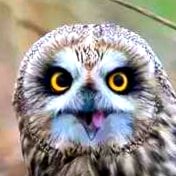
This little Northern Saw-whet Owl was found on the side of a road in Marshfield, MA, unable to fly away.
Marshfield Animal Control brought him to our hospital and, upon examination, our veterinary team found trauma to his right eye. We suspect he may have been hit by a car, which is unfortunately a common injury for owls this time of year. Northern Saw-whet Owls are the smallest owl species here in New England, and as the weather gets colder some migrate in search of food and a more temperate winter habitat. That extra movement and body heat needed to keep warm requires a lot of calories, which means they may be hunting along busy roadways as they search for their next meal.
He’s been stabilized, and we’re hopeful that with some cage rest, supportive care and pain meds he’s on the path to recovery. He’s due for a recheck in the next couple of days, which will give us a better idea of how he’s recuperating and whether his vision has been affected.
Northern Saw-whet Owls may be small, but they’re skilled nighttime hunters. Unlike hawks and falcons, who primarily hunt during the day and rely heavily on their vision to spot prey, owls rely on their exceptional hearing to help them hunt in the dark.
Like other owls, Northern Saw-whet Owls rely on both sight and hearing to hunt, and their exceptional hearing helps them locate prey in the dark. Even owls with vision loss in one eye can usually adapt well enough to return to the wild. Ultimately, it depends on their individual injuries and whether they can successfully hunt and catch live prey.
Ocular injuries in birds of prey are not always visible from the outside so an ophthalmic exam is always conducted by our veterinary team as part of our initial exam. If you find an injured raptor its always best to have them fully examined. Thank you to Marshfield Animal Control for getting him to us for evaluation. We’ll keep monitoring this little guy and keep you posted as we learn more!
o,O
poor guy
I just checked for updates (I usually create posts in advance so I always have enough stories for a few days) and it looks like this owl’s eye was still bleeding and inflamed after a few days of treatment.
Dr Patel was able to perform a very successful surgery on him. With owls, damaged eyes are not fully removed for a number of reasons.
First, the eyes make up a huge portion of the skull. If humans had owl sized eyes, they would be softball/grapefruit sized! This puts the nerves for both eyes very close together, so a minor mistake in removing one eye can lead to blinding the other otherwise healthy eye.
Secondly, since most owls, including Saw Whets like this guy, are night hunters, they rely more on their ears than their eyes. This lets them hunt when there is no moonlight or they are under tree cover, etc. Their faces are parabolic in shape to funnel sound to their ears, which are right behind their eyes. Removing the whole eye (again, consider how much of their skull is open space for eyes!) leaves a huge void that can collapse on itself without that eye offering internal structure. If that parabolic shape of the face is lost, now they cannot only not see well, they now can’t hear well. Vision and hearing would be lost on the same side, and there is no way an owl can hunt.
There are a few other potential complications that I have gone into before in this post and I also have a diagram there showing how just the frontal portion of the eye is removed while the rest is left to provide structure. Don’t worry, nothing gory over there! I enjoy the procedural photos, but I know that’s not why you guys come here.
Dr Patel said this owl is very spicy, came out of the anesthesia just as vibrant and grumpy as before, and after its recovery period, it will be placed outdoors to acclimate to monocular vision. Eventually when it is healthy again, if it can demonstrate it still has the ability to hunt, it should be releasable so it can get back to its owl business!

